
Old Man At The Bridge
(After Ernest Hemingway)
An old man in very dusty clothes sat by the side of the road. There was a pontoon [pɒnˈtuːn] bridge across the river and carts, lorries, and men, women and children were crossing it and going on. But the old man sat there without moving. He was too tired to go on.
It was my business to cross the bridge and see where the enemy was. I did this and returned over the bridge. There were not so many carts coming off the bridge now, and very few people on foot, but the old man was still there.
“Where do you come from?” I asked him. “From San Carlos,” he said. “I was taking care of animals,” he explained.
“Oh,” I said without much understanding.
“Yes,” he said, “I stayed, you see, taking care of animals. I was the last one to leave the town of San Carols.”
He did not look like a shepherd, and I looked at his dusty clothes and his grey dusty face and said, “What animals were they?
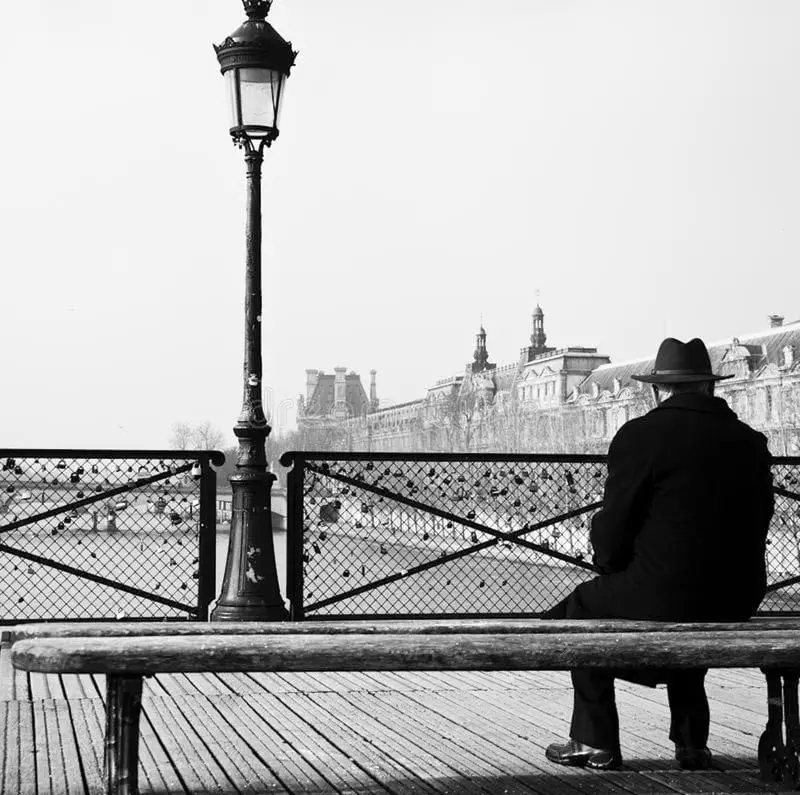
“Different animals,” he said. “I had to leave them.”
I was watching the bridge and the country of the Ebro Delta and thinking how long now it would be before we would see the enemy.
“What animals were they?” I asked. “There were three animals together,” he explained.
“And you had to leave them?” I asked. “Yes. Because of the artillery. The captain told me to go because of the artillery.”
“And you have no family?” I asked, watching the far end of the bridge where a few last carts were coming.
“No,” he said, “only the animals I told you about. The cat, of course, will be all right. A cat can look after itself, but I cannot think what will become of the others.”
“What politics have you?” I asked. “I am without politics,” he said. “I am seventy-six years old. I have come twelve kilometers now and I don’t think I can go on.”
“This is not a good place to stop,” I said.
“I will wait a little,” he said “and then I will go.”
He looked at me very tiredly, then said, “The cat will be all right. But the others. Now, what do you think about the others?”
“Well, perhaps they’ll be all right, too.” “You think so?” “Why not?” I said, watching the far end of the bridge where now there were no carts.
“But what will they do under the artillery when I was told to leave because of the artillery? It’s better not to think about the others.”
“Now, if you can, get up and try to walk,” I said.
“Thank you,” he said. He tried to get to his feet, but sat down in the dust again.
“I was only taking care of animals,” he said again but not to me. “I was only taking care of animals.”
There was nothing to do about him. The fascists were coming nearer to the bridge.
Сюжет
Действие происходит во время испанской гражданской войны. Рассказчик — репортёр — встречает старика, сидящего у моста и неспособного дальше идти. Старик бежал из своей деревни, спасаясь от наступающих фашистов.
Он беспомощен и обеспокоен судьбой своих животных: коз, кошек, собак, которых не смог эвакуировать. Старик почти пассивно принимает неизбежное, он не может что-то изменить, даже когда репортёр пытается ему помочь.
Тем временем войска фашистов приближаются к мосту — опасность реальна и неминуема. Рассказ заканчивается на грустной и тревожной ноте: старик остаётся на месте, как символ человеческой беспомощности перед войной.
Главная мысль
Человеческая слабость и беспомощность перед войной.
Сочувствие к мирным людям, страдающим из-за больших политических и военных процессов.
Символизм: старик и его животные показывают, что невинные страдают больше всех.
-
There was nothing to do about him — это о старике у моста. Он не может никуда идти, не может спасти себя, его судьба вне контроля. Репортёр понимает: ничего нельзя изменить, старик обречён.
-
The fascists were coming nearer to the bridge — реальная угроза, которая приближается. Мост символизирует границу между безопасностью и опасностью, между жизнью и войной.