
New Trends in Education
Sweden is turning back to books, pens and handwritten notes in its classrooms.
After years of embracing laptops, tablets and digital learning, Sweden is changing its approach to education. The country that once became a pioneer of digital classrooms is now putting greater emphasis on printed textbooks, handwriting, reading and traditional teaching methods.
And this isn’t just a nostalgic return to the past. It’s a response to growing concerns about children’s reading skills, concentration and the impact of excessive screen use on learning.
The Swedish government has been investing millions in getting physical textbooks back into schools, with 555 million Swedish kronor allocated annually from 2026. It has also introduced measures to reduce unnecessary screen use, particularly among younger children.
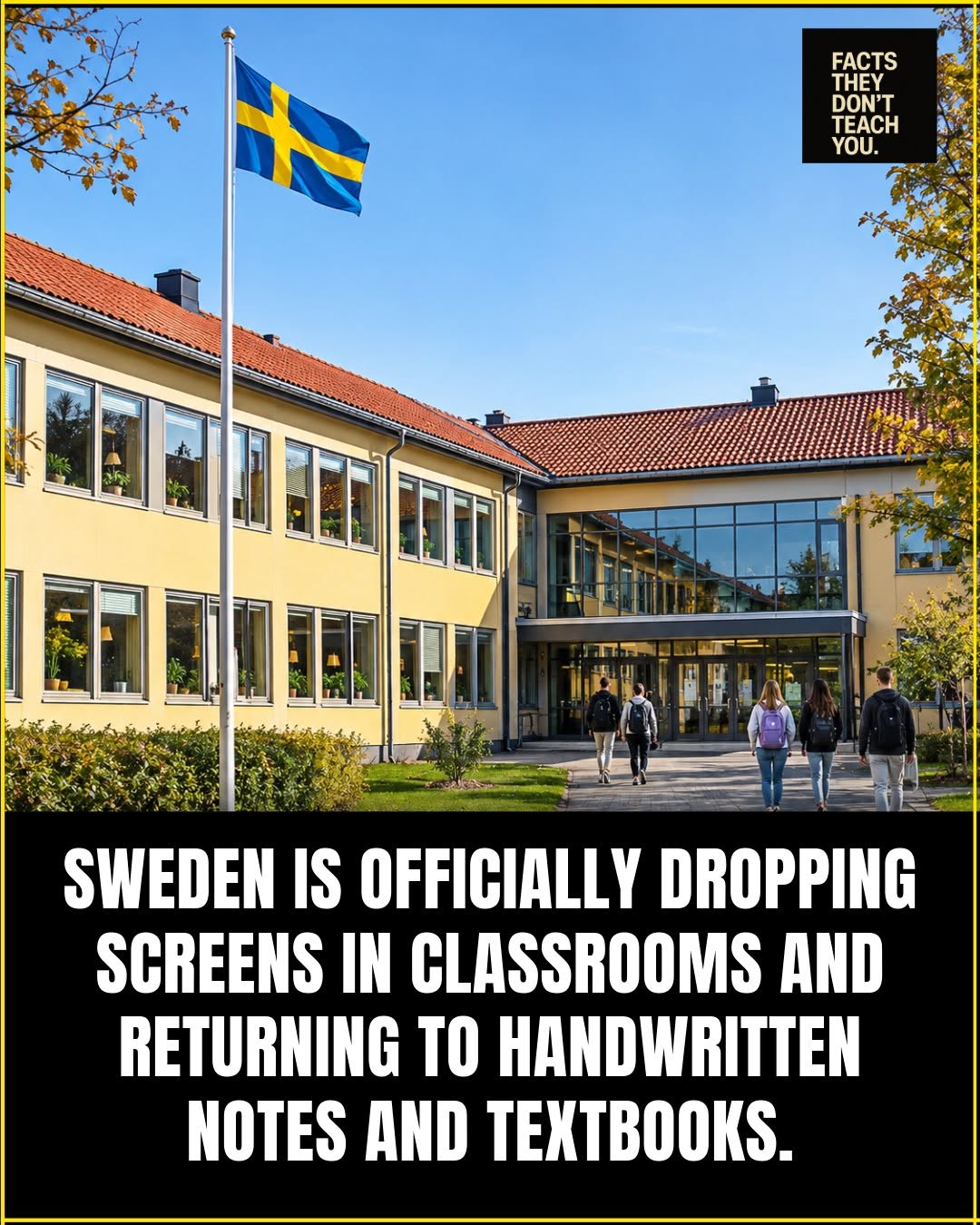
Starting in autumn 2026, mobile phones are also set to be banned throughout the school day in Swedish schools.
Teachers have increasingly highlighted something important: children need time to read physical books, write by hand, concentrate and develop their understanding without constantly switching between screens, notifications and digital distractions.
But Sweden isn’t abandoning technology altogether. The goal is to make digital tools support education rather than allowing screens to dominate the classroom.
And perhaps there’s an important lesson here for the rest of the world.
For years, we were told that more technology automatically meant better education. Now, one of the world’s most digitally advanced countries is reconsidering that assumption.
Maybe the future of education isn’t about putting a screen in front of every child. Maybe it’s about knowing when to put the screen away and give a child a book, a pencil and the space to think.